
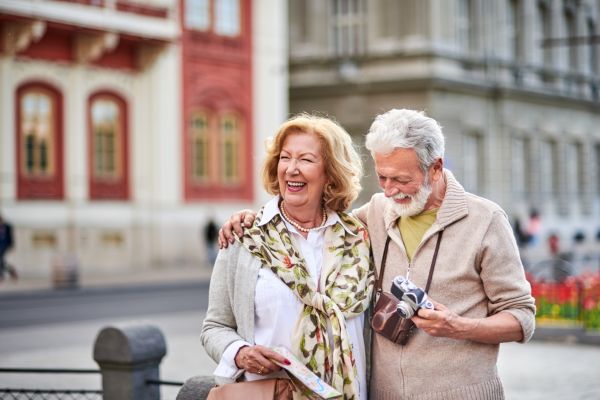
There is a certain kind of confidence that comes with age, though it rarely looks dramatic. It appears in the traveler who checks the platform twice before boarding, carries a small notebook instead of relying entirely on a phone, and knows that missing one train is not the end of the world.
Senior travelers often bring something different to the road. They are usually less interested in rushing through a checklist and more willing to sit, observe, ask questions, and let a place reveal itself slowly. Their journeys may involve practical planning, comfortable pacing, and a little more caution, but they are rarely short on adventure.
Senior travelers’ tales are filled with missed connections, unexpected friendships, family memories, bold decisions, and moments of quiet wonder. They remind us that travel does not belong only to the young, the fast, or the endlessly energetic. Curiosity does not retire.
Beginning Again After Retirement
For many older adults, retirement creates the first real opportunity to travel without squeezing everything into a short holiday. Work schedules disappear. Children are grown. The calendar suddenly contains stretches of open space that once seemed impossible.
That freedom can feel exciting, but also unfamiliar.
Some seniors begin with a destination they postponed for decades. Perhaps they once dreamed of walking through Rome, seeing the pyramids, visiting a village connected to their family history, or taking a train across a country they knew only from books. The journey becomes more than a vacation. It feels like completing a promise made to an earlier version of themselves.
Others travel because they are entering a new phase of life. A person who has recently retired, lost a partner, recovered from illness, or moved away from a longtime home may use travel as a way to rediscover independence.
The first trip can be emotional. There may be nervousness at the airport, confusion over digital boarding passes, or second thoughts while packing. Yet once the journey begins, confidence often returns quickly. One successful trip leads to another, and the world begins to feel open again.
A Slower Pace Reveals More
Younger travelers are often praised for how much they can fit into a single day. Seniors frequently learn the opposite lesson: doing less can create a richer experience.
Instead of visiting five attractions before lunch, an older traveler may spend an entire morning exploring one neighborhood. There is time to notice balconies, local gardens, conversations at a market, and the changing light on an old building. A café stop is not wasted time. It is part of the journey.
This slower rhythm often leads to deeper memories.
A retired teacher traveling through Portugal might remember a long conversation with a shopkeeper more clearly than a famous monument. A couple visiting Japan may recall the kindness of a railway employee who helped them find the correct platform. A widow traveling alone in Greece may remember the family who invited her to share fruit at a roadside table.
Senior travelers’ tales often focus on these small human moments. The destination matters, of course, but the details between the major sights are what give the story warmth.
Moving slowly also allows travelers to adjust when plans change. A rainy afternoon becomes an excuse to visit a quiet museum. A delayed ferry creates time for lunch beside the harbor. There is less pressure to force every hour into a perfect schedule.
Traveling With a Lifetime of Memories
Older travelers rarely arrive in a place completely empty-handed. They carry decades of memories, references, family stories, and historical knowledge with them.
A city may remind someone of a song heard in childhood. A village may resemble the place their grandparents described. A museum exhibit may connect to an event they remember seeing on television many years ago. Travel becomes a conversation between the present and the past.
For some seniors, visiting ancestral towns is especially meaningful. They may search for old records, churches, family homes, or streets mentioned in letters. Sometimes they find exactly what they hoped for. Sometimes the original building is gone, the family name has changed, or no one remembers the story.
Even then, the journey can feel worthwhile.
Standing in the landscape where earlier generations lived gives family history a physical shape. Names and dates stop feeling abstract. The traveler sees the hills, weather, roads, and distances that shaped those lives.
These experiences often become stories shared with children and grandchildren. The journey does not end when the traveler returns home. It enters the family memory.
The Courage of Traveling Alone
Solo travel later in life requires a special kind of courage. It may begin after divorce, widowhood, or simply the realization that waiting for someone else could mean never going.
The first solo journey can feel intimidating. Eating alone in a restaurant, handling luggage, navigating unfamiliar streets, and making decisions without a companion may all feel uncomfortable at first.
But independence grows through practice.
Many senior solo travelers discover that they are more capable than they assumed. They learn to ask for help, use public transport, manage changing plans, and enjoy their own company. They also find that traveling alone often makes conversation easier. Other people are more likely to speak to someone sitting by themselves than to approach a closed group.
A solo senior traveler may meet students in a hostel lounge, families on a train, local guides, or other retirees exploring the same region. These interactions can be brief, but they reduce loneliness and add unexpected energy to the trip.
Solo travel does not mean being alone every moment. It means choosing when to join others and when to step away.
When the Journey Tests Patience
Not every travel story is graceful. Some of the best senior travelers’ tales involve wrong turns, broken suitcase wheels, medication left in a hotel room, or a bus that seemed to be heading in the right direction until it did not.
Age can add practical complications. Long walks may become tiring. Stairs can be difficult. Hearing announcements in a noisy station may be challenging. Travel insurance, mobility needs, dietary requirements, and access to medical care require careful thought.
Still, experienced travelers often handle these problems with humor.
They understand that mistakes are part of travel. A couple may laugh for years about the night they arrived at the wrong hotel. A grandfather may retell the story of accidentally ordering an enormous plate of seafood because he misunderstood the menu. A group of retired friends may remember getting lost in a market and finding the best meal of their trip while trying to escape it.
Patience becomes one of the most useful travel skills. So does the ability to accept help without embarrassment.
Friendship on the Road
Travel can be unexpectedly social for seniors. Group tours, cruises, walking holidays, railway journeys, and cultural programs often bring together people who might never have met at home.
Friendships form quickly when travelers share unfamiliar experiences. They help one another with bags, exchange photographs, compare notes, and laugh about the day’s confusion over dinner.
Some friendships continue long after the trip ends. People visit one another, plan future journeys, or maintain regular contact across countries. Others remain brief but meaningful.
Older travelers may also connect easily with local people because they are often willing to listen. They ask about traditions, families, recipes, and changes in the community. Their conversations are not always rushed toward the next activity.
In many cultures, older visitors are treated with warmth and respect. A simple exchange can grow into an invitation for tea, a family story, or a personal tour of a neighborhood.
These encounters become reminders that hospitality is not limited by language.
Adventure Changes Its Meaning
Adventure does not always mean climbing a mountain or crossing a desert. For one person, adventure may be taking a hot-air balloon ride. For another, it may be navigating a foreign metro system alone.
As people age, adventure often becomes more personal.
It can mean trying a food once avoided, swimming in the sea after many years, attending a festival in a crowded square, or returning to a place visited with a late spouse. It can also mean accepting physical limits without allowing them to define the entire experience.
Senior travelers often become skilled at adapting. They choose shorter routes, rest when needed, and make comfort part of the plan. This does not make the journey less meaningful. It simply makes it sustainable.
The goal is not to travel exactly as one did at twenty-five. The goal is to remain engaged with the world.
The Stories That Return Home
The true value of senior travelers’ tales is not measured by passport stamps. It is found in the way travel expands daily life after the journey is over.
A traveler returns with photographs, recipes, new friendships, and perhaps a slightly different view of what is possible. The experience may inspire family members, especially younger ones who assume that adventure has an age limit.
These stories also carry a quiet message about time. Many senior travelers understand that the perfect moment may never arrive. Health, finances, and circumstances can change. The trip taken now may matter more than the one endlessly postponed.
That awareness does not make travel fearful. It makes it precious.
A World Still Waiting to Be Seen
Senior travelers’ tales show that exploration is not a stage of life that must eventually be left behind. It can continue in new forms, at new speeds, and with deeper appreciation.
Older travelers may pause more often, plan more carefully, and choose comfort over chaos. Yet they also bring patience, resilience, humor, and a lifetime of perspective to every destination.
Their adventures prove that wonder does not fade simply because the years pass. In some ways, it grows stronger. A familiar sunset can feel newly beautiful. A conversation with a stranger can carry unexpected weight. A long-delayed dream can finally become a real road, a real city, and a real memory.
The world remains large, surprising, and unfinished. For those still willing to step beyond the front door, there are always more stories waiting.