
Hostels can be brilliant for solo travel: they make it easy to meet people, share recommendations and keep accommodation costs manageable. But a bunk in a shared room comes with different considerations from a hotel room.
Good hostel safety for solo travelers is less about expecting trouble and more about checking how a property handles ordinary shared-space risks. A few questions before booking, followed by simple routines after arrival, can make an enormous difference to your comfort.
Look beyond the overall rating before booking
A hostel with excellent social reviews is not automatically the right choice for someone prioritising rest and security. Read recent reviews from solo guests, especially comments about doors, lockers, staff responses and the walk back after dark. Repeated reports of broken locks or unresponsive reception deserve attention.
Check whether dorm doors require a key or access code, whether guests have individual lockers, and whether reception operates overnight. A security camera in a hallway may help staff monitor common areas, but it does not replace a functioning door lock. Photos can show you the layout, although they cannot prove that equipment still works.
Location matters too. A slightly more expensive hostel near reliable transport and busy streets may be easier to reach safely than a bargain requiring a long walk through unfamiliar streets at night. Compare options using your own arrival time, not just the daytime map view. For a broader decision, consider choosing safe accommodation when travelling alone.
Choose the dorm that suits your boundaries
Consider room size and room type
A smaller dorm means fewer people passing through, although it is not a guarantee of better behaviour. Women-only dorms can feel more comfortable for some travellers; others prefer mixed rooms or a private room within a social hostel. Choose based on your needs rather than assuming any category is automatically secure.
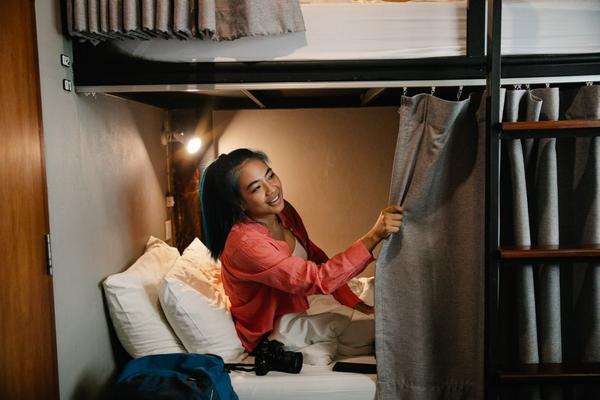
Before paying, look at whether the bed has a privacy curtain, an accessible light and a place to keep essentials without blocking the aisle. If you sleep lightly or expect to arrive late, ask about quieter rooms or beds away from the main entrance.
Check the physical space on arrival
Make sure the dorm door closes and locks properly. Find the nearest emergency exit and check that luggage is not obstructing escape routes. If a lock, window or alarm appears damaged, tell staff promptly. A hostel should be able to explain what it will do about a safety problem rather than dismissing it.
Build a routine around lockers and valuables
One of the most useful hostel security tips is to check locker dimensions and the locking system before you travel. Some lockers need your own padlock; others use a key or electronic access. A locker large enough for a laptop might still be too small for your entire backpack, so know what you can actually secure.
Keep your passport, spare cards, cash and electronics in suitable locked storage when you do not need them, while following any local identification requirements. Carry only what you expect to use that day, and keep a backup payment method separate from your everyday wallet. A luggage cable can discourage casual interference but is not a substitute for secure storage.
Do not leave your phone, wallet or room key exposed while showering or sleeping. Charging devices unattended in a shared area can also be risky. These habits also apply to keeping travel documents and valuables secure across a longer trip.
Treat bathrooms and common areas as shared spaces
Shared room safety does not stop at the dorm door. Bathrooms, kitchens, laundry rooms and luggage-storage areas may be used by guests you have never met. Check whether bathrooms offer working privacy latches and adequate lighting. Bring a small toiletry bag so you can take important items with you rather than leaving them on a sink or hook.
Hostel common rooms are good places to meet someone before exploring the city together. Keep track of your drink and belongings, and remember that you never owe another guest your itinerary, room number, social-media details or an invitation into your sleeping space.
Plan late arrivals before the journey starts
Imagine your train is delayed and you reach the city at 11:30 p.m. You discover that reception closed at ten, your phone battery is low and you cannot find the entrance. This is avoidable with one message sent earlier in the day.
Confirm check-in hours and ask for written late-arrival instructions, including how to reach staff if the entry system fails. Save the hostel address and confirmation offline, arrange your transport from the station, and have a charged power bank. Do not post shared entry codes in public chats. If your itinerary is uncertain, a staffed 24-hour reception may be worth the extra cost.
The same planning helps when returning after an evening out. Check the route before leaving, use suitable transport when walking feels unsafe, and avoid becoming so intoxicated that you cannot manage your surroundings or belongings. More detailed guidance on arriving in a new city alone can help with this part of the trip.
Recognise red flags and know when to leave
Take repeated reports of theft, harassment, unauthorised visitors or broken access controls seriously. During your stay, another guest entering your bed space without permission, persistent unwanted attention or staff refusing to address a credible concern are reasons to act rather than wait.
Tell reception what happened, request a different bed or room if appropriate, and keep a record of important communications. If staff cannot resolve an immediate safety concern, move to a safer location when you can and contact local emergency services if you face a threat. Know the hostel’s cancellation terms and have an alternative property in mind; a prepaid booking is not a reason to stay somewhere you feel endangered.
Frequently asked questions
Are hostels safe for people travelling alone?
Many solo travellers stay comfortably in hostels, but safety varies by property, location and the behaviour of other guests. Recent reviews, reliable access controls, usable lockers and responsive staff are more useful indicators than the hostel label alone.
Should I bring my own padlock?
Yes, unless the hostel confirms that a suitable lock is provided. Check which type and size its lockers accept. A padlock is helpful only when the locker itself is sturdy and works properly.
Is a women-only dorm safer than a mixed dorm?
A women-only dorm may improve comfort and privacy for some guests, but it cannot guarantee safety. Consider staff practices, door security, shared bathrooms and reviews alongside room type.
What should I do if I feel unsafe in my dorm?
Go to a staffed or public area, explain the specific concern and ask to change rooms. If the threat is immediate, seek emergency assistance. Prioritise your safety over avoiding an awkward conversation.
Make security part of the booking decision
The best hostel tips for solo travel are practical rather than dramatic: choose a property with clear policies, verify the systems you will rely on, lock away valuables and plan how you will arrive and leave. A good hostel should make it easier to enjoy the social side of travelling without asking you to give up privacy or peace of mind.