
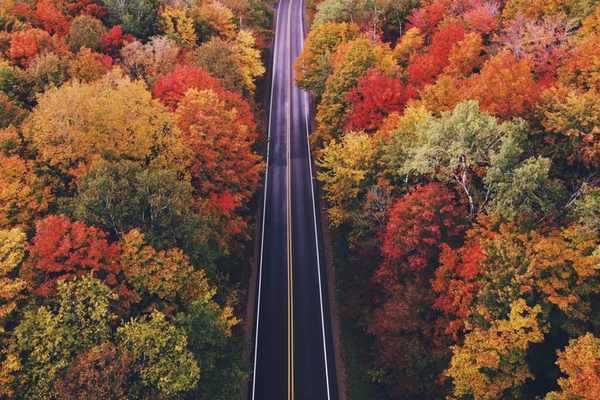
Fall color in the United States does not arrive on one national schedule. It rolls across the country in waves, beginning in cooler northern and high-elevation landscapes before reaching lower valleys and southern mountain roads. That is why the best fall foliage destinations in the USA are easiest to plan by region and elevation rather than by choosing one “perfect” weekend months ahead.
Weather can shift peak foliage timing from year to year. Cool nights, sunny days, rainfall, drought, wind, and elevation all influence when leaves turn and how long they stay on the trees. Use the windows below for planning, then check official state or park foliage reports shortly before departure.
New England fall colors: the classic early-season trip
Green Mountains, Vermont
Vermont is one of the most dependable places for sugar-maple reds, birch yellows, and orange hardwood forests. Color usually begins in northern Vermont and at higher elevations in September, then spreads into lower valleys and southern areas. The strongest planning window is generally the last week of September through the first two weeks of October.
For flexibility, base yourself around Stowe, Woodstock, or the Northeast Kingdom and plan several short drives. Changing elevations make it easier to adjust if one area is already past peak.
White Mountains, New Hampshire
The White Mountains combine steep slopes, river valleys, covered bridges, and long mountain views. Early October is often a strong target, with higher terrain changing before lower valleys. The Kancamagus Highway is the best-known drive, while Routes 302 and 2 offer alternative scenery and useful options when traffic is heavy.
Staying two nights instead of attempting a one-day dash is practical. Mountain weather changes quickly, and an extra morning can turn a foggy trip into a clear one.
Acadia National Park, Maine
Acadia pairs autumn forest with granite summits and Atlantic coastline. The National Park Service says peak color usually arrives in mid-October, commonly somewhere from the first through the third week of the month. That makes Acadia a useful choice after northern New England has started moving past peak.
Popular roads and trailheads become busy, so start early and consider quieter carriage roads or the Schoodic Peninsula later in the day.
Great foliage destinations beyond New England
Adirondacks, New York
The Adirondacks cover a vast area, so there is rarely one peak date for the whole region. Historically, areas around Lake Placid, Tupper Lake, and higher terrain tend to peak from late September into mid-October. Scenic highways, lake views, gondola rides, and hiking trails make it easy to build a trip around current conditions.
If your dates are fixed, use New York’s weekly foliage report and choose the part of the Adirondacks closest to peak rather than committing to one town too early.
Upper Peninsula, Michigan
Michigan’s Upper Peninsula is a strong choice for brilliant hardwood color beside dark evergreen forest and Lake Superior. Late September into early October is typically the key period, with northern and inland locations changing first. The Keweenaw Peninsula, Marquette area, and roads near Lake of the Clouds are especially scenic.
It also tends to feel less concentrated than famous New England corridors, with waterfalls, shoreline overlooks, and forest roads adding variety.
Aspen country, Colorado
Colorado offers a different autumn palette. Quaking aspens turn mountain slopes brilliant gold against dark conifers and blue sky. September is generally the prime month, but peak color can be brief and varies sharply with elevation.
Aspen, the Maroon Bells area, Kebler Pass, and mountain roads near Telluride are popular choices. Colorado tourism officials advise flexibility because color may last only about a week in a specific location. Choose travel dates first, then use current reports to decide which elevation looks best.
Southern Appalachian foliage lasts later
Blue Ridge Parkway, Virginia and North Carolina
The Blue Ridge Parkway is ideal for travelers who want a long foliage season rather than one peak weekend. The route stretches nearly 470 miles and crosses more than 5,000 feet of elevation change. Scattered high-elevation color can appear in late September, while most trees typically change through October, moving down the mountainsides as the month progresses.
If high overlooks are past peak, lower sections may still be colorful. Mid to late October is often a useful target for finding strong color somewhere along the parkway.
Great Smoky Mountains, Tennessee and North Carolina
The Smokies extend the season further. High-elevation trees can begin turning in mid-September, with stronger color above 4,000 feet developing in early to mid-October. Lower and middle elevations often show their best color from mid-October into early November.
October is also extremely busy. A practical plan is to start early, choose a less crowded drive or trail, and keep a second route ready if parking fills at major viewpoints.
How to time a fall foliage trip more accurately
Treat these dates as planning windows, not guarantees. About seven to ten days before traveling, compare official foliage reports, recent park updates, weather forecasts, and webcams where available. Strong wind can strip leaves quickly, while warm weather can delay the progression.
For a multi-day road trip, travel from higher elevation to lower elevation or from north to south. That follows the seasonal movement of color and improves your chances of seeing peak conditions instead of betting the entire trip on one location.
Frequently asked questions
What month is best for fall foliage in the USA?
September and October cover most major destinations. Northern New England, the Upper Midwest, and high mountain areas can peak from late September into early October, while the Blue Ridge and Great Smoky Mountains often stay colorful later in October and sometimes into early November.
Where can I see the best New England fall colors?
Vermont’s Green Mountains, New Hampshire’s White Mountains, and Maine’s Acadia National Park are standout choices. Combining two regions can improve your odds because their peak periods rarely line up perfectly.
When does the Blue Ridge Parkway usually peak?
There is no single peak date for the entire parkway. Higher elevations usually change first, while lower slopes can remain colorful later. Mid to late October is a common target for many sections.
How far in advance should I book a fall foliage trip?
Book lodging early for famous destinations, especially Vermont, New Hampshire, Acadia, and the Smokies. Keep daily driving plans flexible because the best color can shift with elevation and local weather.
Choose a region, then follow the color
The best fall foliage trips balance advance planning with last-minute flexibility. Reserve accommodation and a broad route early, but use current reports to decide exactly where to drive or hike each day. From late-September gold in Colorado and the Adirondacks to October maples in New England and later color in the southern Appalachians, the country offers a long autumn window if you follow the color as it moves.