
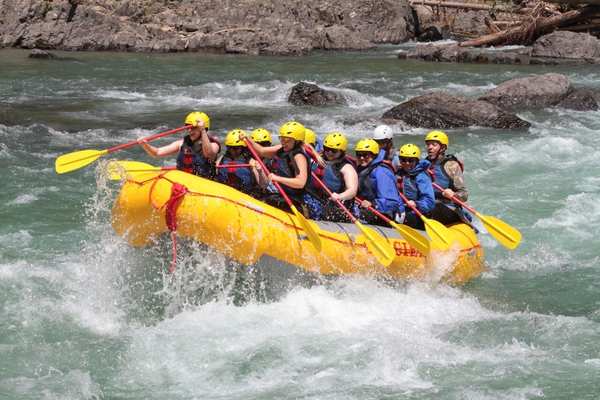
Choosing among whitewater rafting trips in the USA is less about finding the “wildest” river and more about finding the river that matches your group. Rapid class matters, but so do water level, trip length, remoteness, scenery, guide format, age rules. A first-time rafter may have a better day on a guided Class III run than on a famous Class IV or V section that feels too intense.
Some rivers are half-day adventures with simple logistics. Others are multi-day wilderness expeditions where rafting is only part of the attraction. Comparing the experience you want is the fastest way to narrow the options.
Start with rapid class, but do not stop there
The International Scale of River Difficulty generally runs from Class I, with easy moving water, to Class V, where rapids can be long, powerful, technical, or consequential. Class III brings stronger waves and more maneuvering, while Class IV requires precise boat handling in turbulent water. Guided rafting reduces the skill burden on passengers, but guests still need to follow commands, paddle when asked, stay balanced, and accept that swimming is possible.
A river rating is not a fixed promise. Flow changes can alter the same rapid. Instead of asking only, “What class is this river?” ask, “What class is the section we are booking at the expected flow, and how continuous are the rapids?”
How major U.S. rafting rivers compare
New River Gorge, West Virginia: flexible for mixed groups
The New River offers useful choices. Inside New River Gorge National Park and Preserve, the upper river has long pools and rapids generally up to Class III, while the lower gorge features stronger Class III to V whitewater. Commercial trips commonly run from spring through fall, with options from several hours to multi-day outings.
This makes the New practical for mixed-experience groups. Beginners can choose a milder section, while experienced rafters can target the lower gorge. The lesson is simple: the specific section matters more than the river name.
Gauley River, West Virginia: concentrated fall intensity
The Gauley has a different personality. Its famous rafting season is tied to scheduled releases from Summersville Dam, creating a concentrated fall window for powerful whitewater. The upper Gauley is especially demanding, while the lower section still contains serious rapids but is offered to a broader range of guided guests.
Choose the Gauley if whitewater intensity is the main goal. It is less suitable for someone uncomfortable with strong hydraulics or repeated major rapids. Minimum ages vary by section and outfitter, so confirm the exact rule before booking.
Rogue River, Oregon: wilderness with varied adventure
The Wild Rogue suits travelers who value scenery and multi-day travel as much as rapids. Its remote canyon combines Class III and IV+ whitewater with forested landscapes, wildlife, camping, and some lodge-to-lodge itineraries. Access to the wild section is permit-controlled, with a regulated-use season from mid-May to mid-October.
Rather than feeling like one long adrenaline event, the Rogue can be a complete wilderness journey. It is worth comparing for active families and groups that want excitement plus quieter river time.
Colorado River through Grand Canyon: expedition first
The Colorado through Grand Canyon stands apart because duration and setting define the trip. Commercial whitewater trips can last from a few days to over two weeks, while long private trips require permits and substantial technical experience. The experience includes camping, desert conditions, long river miles, and dramatic canyon scenery.
This is a stronger fit for travelers who can commit time and budget and want an expedition. If your priority is a quick burst of whitewater, a shorter river is easier to plan.
Middle Fork of the Salmon, Idaho: remote multi-day immersion
The Middle Fork of the Salmon is another classic adventure river trip, known for wilderness, camps, hot springs, and sustained river travel. Conditions change through the season: earlier trips can have colder, faster water, while lower summer flows can make rocky channels and technical maneuvering more important.
For travelers comparing rafting trips USA wide by remoteness and scenery, the Middle Fork stands out. It is less convenient for anyone who wants short days, hotel nights, or simple road access.
Browns Canyon, Colorado: accessible mountain rafting
Browns Canyon on the Arkansas River combines Rocky Mountain scenery with day-trip logistics that fit easily into a Colorado vacation. It works well for travelers who want substantial whitewater without a remote expedition. Because flow changes through the season, ask how the river is running during your dates rather than assuming every summer trip feels the same.
Match the river to your least confident rafter
Imagine two couples traveling together. One pair has rafted Class IV water before; the other has never been in whitewater. Booking the hardest section to satisfy the experienced pair could make the day miserable for the beginners. A moderate New River, Rogue, or Browns Canyon trip may keep the whole group comfortable while still delivering real adventure.
Before paying a deposit, ask four specific questions: what rapids are expected on your exact section, what changes when water levels rise or fall, what swimming ability or fitness is recommended, and what minimum age applies on your date. Also ask whether guests paddle actively, ride in an oar-powered raft, or can choose between formats.
Let season and trip length narrow the choice
Season affects both difficulty and availability. Snowmelt can make western rivers faster and colder earlier in the year. Dam-release rivers may have narrow prime windows. Desert trips can be hot, while shoulder-season mornings may be cold. Check current river levels, access conditions, fire or road alerts, and operator guidance close to departure.
Trip length matters too. Half-day trips suit first-timers and tight schedules. Full-day trips give more river time without expedition logistics. Multi-day trips add camping, remote scenery, meals, and a stronger sense of journey, but require more comfort outdoors.
FAQ
What is a good whitewater rafting trip for beginners?
Beginners are generally better served by professionally guided Class II or III sections with manageable waves and recovery areas. The upper New River and many guided mountain sections are useful starting points to compare.
Is Class IV rafting suitable for a first-timer?
Sometimes, but it depends on the river, flow, age, fitness, swimming comfort, and outfitter rules. Tell the operator your experience level honestly and follow its section-specific recommendation.
When is the best time to go rafting in the USA?
There is no nationwide peak. Western snowmelt rivers often build in spring and early summer, the New River is commonly rafted from spring through fall, and the Gauley is best known for scheduled fall releases.
Should I book guided rafting or go privately?
For unfamiliar whitewater, a guided trip is usually the practical choice. Guides provide equipment, local knowledge, instruction, transport, and emergency experience. Private trips on technical whitewater rivers may require permits and proven skills.
Choose the experience, not the reputation
The right river fits your group’s ability, appetite for risk, available time, and preferred scenery. Compare the exact section, expected flow, rapid continuity, age rules, guide format, and trip length before focusing on famous names. A well-matched river should leave everyone excited to raft again, not simply relieved that they chose the biggest rapids on the map.